Nature's Tiny Terminators: 10 Fascinating Facts About Scorpions' Metal-Reinforced Weapons
Scorpions are ancient arachnids that have roamed Earth for over 400 million years, evolving a fearsome arsenal that includes powerful pincers and a venomous stinger. But what if we told you these already formidable weapons are reinforced with actual metals—zinc, manganese, and iron? Recent research confirms that this metallic enhancement isn't accidental but a key evolutionary adaptation. In this listicle, we break down the science behind these 'terminator' scorpions, from the discovery of metal deposits to what it means for biology and materials science.
1. The Classic Scorpion Arsenal
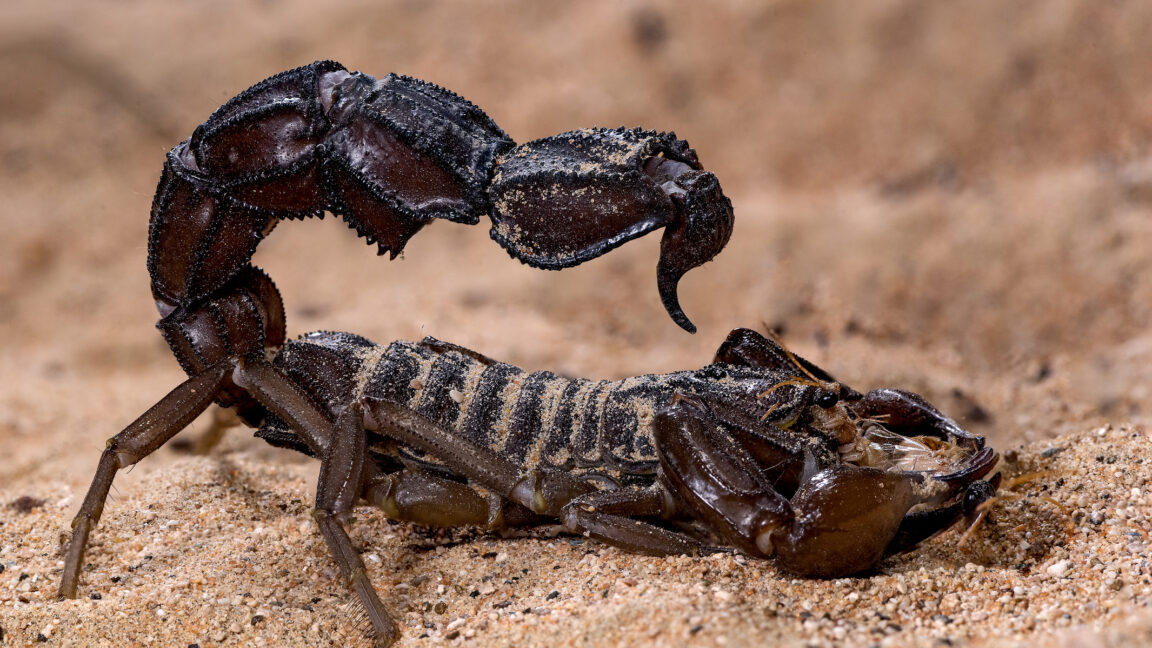
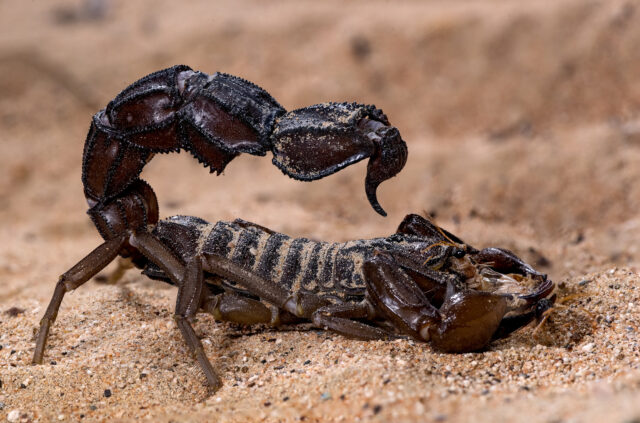
Scorpions are armed with dual front pincers, technically known as chelae or pedipalp appendages, and a venom-injecting telson, or stinger, on the posterior of their tail. These structures look dangerous enough on their own, but a closer chemical examination reveals something extraordinary: they contain metals like zinc, manganese, and iron. For decades, scientists knew these metals were present, but the big question was whether scorpions actively evolved this trait or simply absorbed them from their environment.
2. A Discovery Decades in the Making
“That the metals are there has been known since the 1990s,” said Sam Campbell, a biologist at the University of Queensland, Australia. “What we didn’t know was whether scorpions evolved to be like that or if it was accidental and they were just picking the metals up from the environment.” This uncertainty set the stage for a new investigation into the distribution of metals across different scorpion species, aiming to settle the debate once and for all.
3. The Research Question: Accident or Evolution?
To answer this crucial question, Campbell and his colleagues examined how metals are distributed across the stingers and pincers of various scorpion species. If the metals were simply environmental contaminants, their presence would be unpredictable and inconsistent. Instead, the researchers looked for patterns that would indicate a biological purpose—specifically, hardening these appendages for combat and predation.
4. The Study That Changed the Narrative
Their findings, detailed in a recent study published in the Journal of The Royal Society Interface, confirmed that there was nothing accidental about it. Across multiple species, the metals were concentrated precisely in the areas that experience the most mechanical stress: the tips of the pincers and the stinger. This consistent distribution strongly suggests an evolved mechanism, not environmental chance.
5. How Metals Reinforce Scorpion Weapons
Zinc, manganese, and iron are known for their hardness and durability. In scorpions, these metals are incorporated into the chitinous exoskeleton of their pincers and stingers, creating a natural composite material that resists wear and tear. Think of it as nature's version of reinforced steel—scorpions effectively 'harden' their tools to improve their effectiveness in hunting and defense.
6. A Biological 'Armor-Plating' Strategy
This metal enrichment process is akin to how some other arthropods, like spiders and insects, reinforce their jaws or ovipositors. However, scorpions take it to another level by specifically targeting their primary weapons. The evolutionary advantage is clear: harder pincers mean better grip on prey, and a sturdier stinger ensures venom delivery without breakage.
7. The Role of the Exoskeleton
The scorpion's exoskeleton is made of chitin, a tough but lightweight material. By adding metal ions, the exoskeleton becomes even more resistant to cracking and abrasion. This is achieved through biomineralization—the same process that gives bones and teeth their strength. Scorpions have evolved to control this process, depositing metals only where needed most.
8. Why Evolution 'Chose' These Metals
Zinc, manganese, and iron are all relatively abundant in soils and prey, but not all are equally useful. Zinc, for instance, is preferred for wear resistance, while iron provides hardness. The choice of metals may depend on the species' habitat and diet. The fact that different species show variation in metal composition further supports an adaptive, rather than accidental, origin.
9. Implications for Materials Science
Understanding how scorpions naturally create metal-reinforced composites could inspire new synthetic materials. Engineers are already looking at biomineralization to design stronger, lighter structures for everything from cutting tools to protective gear. Scorpions are living proof that nature has already solved many engineering challenges.
10. Future Research Directions
Campbell and his team plan to investigate the genetic and biochemical pathways that allow scorpions to deposit metals so precisely. This could lead to breakthroughs in biomimetic manufacturing, as well as deepen our understanding of evolutionary biology. The scorpion's 'terminator mode' is not just a cool story—it's a window into the incredible adaptability of life on Earth.
In conclusion, scorpions are far more than just venomous predators. Their ability to reinforce their pincers and stingers with metals like zinc, manganese, and iron is a remarkable evolutionary adaptation that has been honed over millions of years. Thanks to the work of Sam Campbell and his colleagues, we now know that this metallization is no accident—it's a deliberate biological strategy to enhance combat effectiveness. Next time you encounter a scorpion, remember: its weapons are not just sharp; they're literally hardened with nature's own steel.