NASA's Next-Generation Mars Helicopters: The Future of Aerial Exploration
Since the Ingenuity helicopter completed its historic mission on Mars, engineers at NASA's Jet Propulsion Laboratory have been pushing the boundaries of rotorcraft technology. Building on Ingenuity's incredible success, they are now designing advanced rotorcraft capable of carrying heavier scientific instruments and traveling greater distances through the Red Planet's thin atmosphere. These innovations promise to revolutionize how we explore other worlds, combining the mobility of flight with the endurance of ground missions. Here are answers to key questions about this exciting new era of Martian aviation.
What was the Ingenuity helicopter and why was it significant?
Ingenuity was a small, dual-bladed helicopter that became the first powered aircraft to fly on another planet. Delivered to Mars by the Perseverance rover, it proved that controlled flight is possible in the planet's low-density atmosphere—only about 1% of Earth's density. Its success demonstrated a new paradigm for exploration: using aerial platforms to cover rough terrain, reach inaccessible areas, and scout ahead for rovers. Ingenuity paved the way for future rotorcraft that can carry heavier payloads and fly longer distances, opening up possibilities for science missions that were previously unimaginable.
How did Ingenuity exceed NASA's original expectations?
NASA initially planned for Ingenuity to perform just five flights over 30 days. Instead, it made 72 flights, traveling far beyond its designated test zone and operating for nearly three years. It flew in diverse Martian conditions, from rocky plains to sandy dunes, and even survived the harsh dust season. Each flight provided valuable data on aerodynamics, navigation, and power management in the Martian environment. This overachievement proved that rotorcraft can be reliable workhorses for exploration, not just experimental novelties.
What caused the end of Ingenuity's mission?
Ingenuity's mission ended in January 2024 with a crash-landing during its 72nd flight. The exact cause is still under investigation, but engineers suspect a combination of terrain complexity and a sudden wind gust may have led to loss of control. Despite the crash, the helicopter had already far surpassed all goals, and the data from its final moments will help improve future rotorcraft designs. The mission is considered a resounding success, and the lessons learned are directly informing the next generation of Martian helicopters.
What are the plans for next-generation Mars helicopters?
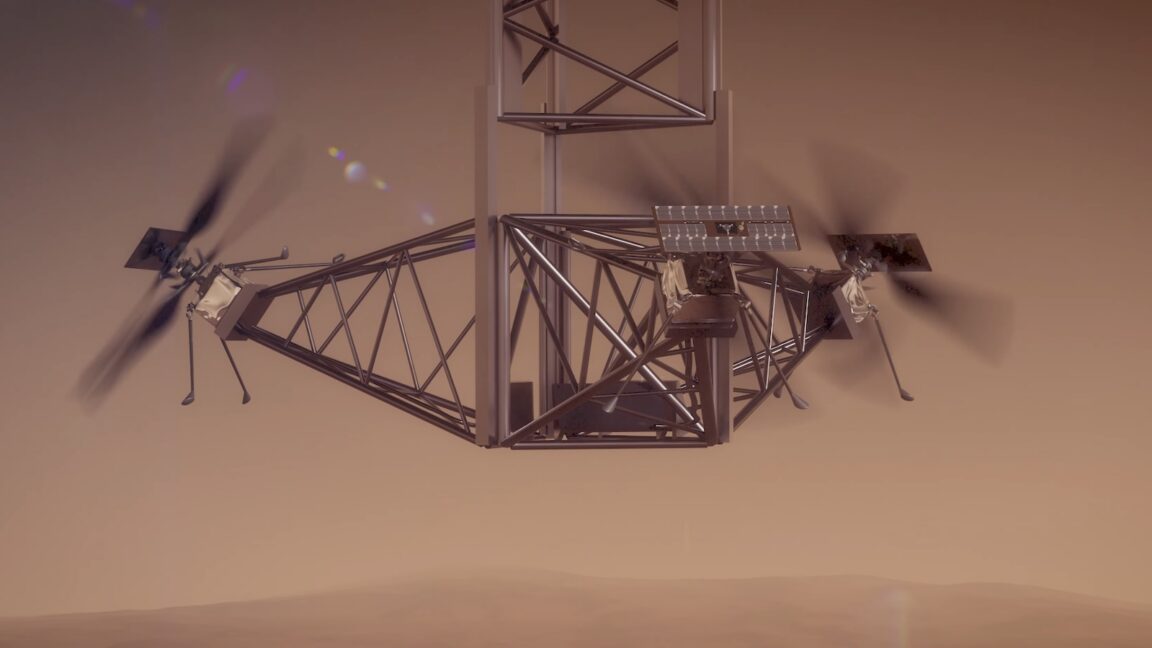
Engineers at JPL are designing rotorcraft that can carry heavier payloads over longer distances than Ingenuity. These advanced machines will have larger rotors, more powerful batteries, and upgraded avionics to handle the challenges of Mars' thin air. The goal is to create a fleet of aerial explorers that can support scientific investigations, such as sampling remote craters or ancient riverbeds, and even assist human missions in the future. The new rotorcraft will be capable of flying several kilometers per sortie, compared to Ingenuity's maximum of a few hundred meters.
What is the SkyFall mission and when could it launch?
NASA's upcoming SkyFall mission plans to send three helicopters to Mars. These rotorcraft will be deployed from a nuclear-powered spacecraft named Space Reactor-1 (SR-1), part of a technology demonstration initiative announced earlier this year. The mission could launch as soon as late 2028. SkyFall's helicopters will build directly on Ingenuity's legacy, carrying advanced scientific instruments to explore multiple sites across the Martian surface. The use of nuclear propulsion for the carrier spacecraft also exemplifies NASA's push toward more power-dense and sustainable interplanetary travel.
How will the new rotor technology improve performance?
The breakthrough in rotor technology centers on increasing lift efficiency in Mars' low-density atmosphere. New blade designs, composite materials, and variable-pitch rotors will allow the helicopters to spin faster and generate more lift while consuming less energy. Combined with more efficient motors and lightweight batteries, these improvements will enable the rotorcraft to carry payloads up to several kilograms—enough for spectrometers, cameras, and soil analyzers. The enhanced range and endurance will allow scientists to explore terrain rovers cannot reach, like steep cliffs or deep gullies, unlocking new frontiers in planetary science.