Redis Iris Launches to Solve Agentic AI's Data Retrieval Crisis
Breaking: Redis Unveils Context Platform for AI Agents
Redis has launched Iris, a context and memory platform designed to address the growing data retrieval challenges of enterprise AI agents. The platform, announced Monday, combines real-time data ingestion, semantic interfaces, and a rewritten storage engine to handle the massive load generated by autonomous agents.
The launch comes as enterprises increasingly find that traditional Retrieval-Augmented Generation (RAG) systems cannot keep pace with agentic AI. According to VentureBeat's Q1 2026 VB Pulse RAG Infrastructure Market Tracker, buyer intent for hybrid retrieval tripled from 10.3% to 33.3% between January and March, while retrieval optimization has become the top enterprise investment priority.
Structural Mismatch at Core
"Companies will have orders of magnitude more agents than human beings," said Rowan Trollope, CEO of Redis, in an exclusive interview. "Orders of magnitude more agents than human beings means orders of magnitude more load on back end systems."
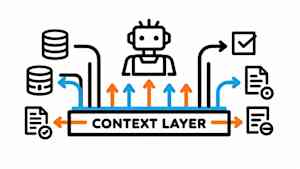
The core problem is scale: agents make far more data requests than human users, but most retrieval layers were designed for human-scale queries. Redis Iris sits as a middleware layer between agents and their required data, automatically generating MCP tools from business data models and storing context on flash storage at a tenth of the cost of in-memory solutions.
Background: The RAG Transition
The enterprise RAG infrastructure is undergoing rapid change. VentureBeat's tracker also found that custom in-house retrieval stacks rose from 24.1% to 35.6% as companies outgrew off-the-shelf options. Redis is not alone in reading these signals; several data platform providers have recently repositioned around agent context layers.
Trollope draws a parallel to the mobile era: when legacy backends faced the load of millions of smartphone users, Redis became the caching layer that absorbed that load. "This is like the analogy of the grocery store in the fridge," he said. "If every time you have to make your sandwich, you have to run to the grocery store to get the food, that's not very efficient."
What This Means for Enterprises
For organizations deploying AI agents at scale, Iris represents a shift from static RAG to dynamic context management. Agents can no longer hard-code middleware; they need runtime interfaces that find and retrieve data efficiently. Redis Iris provides that layer, using a semantic interface that auto-discovers data and an agent memory server built on Redis Flex.
The implications are clear: enterprises must rethink their data infrastructure to support the sheer volume of agent queries. With hybrid retrieval adoption tripling and retrieval optimization now the top investment priority, platforms like Iris could become essential infrastructure for next-generation AI applications.
As Trollope put it, the gap is structural: "Most retrieval layers were built for the human-scale problem." Redis Iris aims to close that gap with a purpose-built context layer that scales with agent demand.